Biología
Scientists find clue to 'maternal instinct'
Noticia en inglés
Oxytocin is widely referred to as the love hormone and plays an important role in the regulation of social and maternal behavior. In recent years, the oxytocin system in the brain has received tremendous attention as key to new treatments for many mental health disorders, such as anxiety, autism spectrum disorders and postpartum depression. New research led by a biologist and his students at LSU have discovered a group of cells that are activated by oxytocin in one area of female mouse brains that are not present in the same area in male mouse brains.
"Many researchers have attempted to investigate the difference between the oxytocin system in females versus males, but no one has successfully found conclusive evidence until now. Our discovery was a big surprise," said Ryoichi Teruyama, LSU Department of Biological Sciences associate professor, who led this study published in PLOS ONE.
The oxytocin receptor cells are present in the brain area thought to be involved in the regulation of maternal behavior. Moreover, the expression of oxytocin receptors in these cells are only present when estrogen is also present. These imply that these cells are involved in inducing maternal behavior. In addition, it confirms what many recent human studies have shown: there is a connection between an altered expression of oxytocin receptors and postpartum depression.
Postpartum depression contributes to poor maternal health and has negative effects on a child's development. A number of studies have found that children of depressed mothers are at risk for a wide range of cognitive, emotional, behavioral and medical problems. Therefore, postpartum depression is a major public health concern that has significant adverse effects on both mother and child. About 10 to 20 percent of women experience postpartum depression after childbirth.
![[Img #56440]](https://noticiasdelaciencia.com/upload/images/07_2019/255_207156_web.jpg)
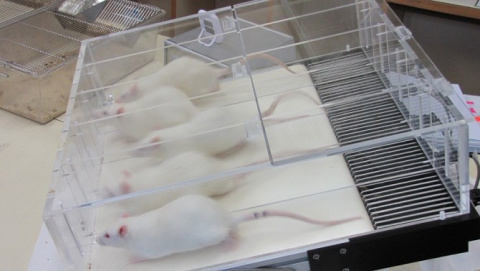
A Louisiana State University biologist and his students have discovered a group of cells that are activated by oxytocin in one area of female mouse brains that are not present in the same area in male mouse brains. (Credit: Ryoichi Teruyama, LSU)
This new discovery that occurred at LSU opens doors to potential new treatments and drugs for postpartum depression targeting oxytocin receptor cells.
"I think our discovery could be universal to all mammals that exhibit maternal behavior, including humans," Teruyama said.
Study co-author Ryan LeBlanc from Denham Springs was an undergraduate student researcher at LSU whose work was instrumental to this discovery. However, he had little previous research experience before joining Teruyama's lab.
Teruyama recalled that when LeBlanc first approached him to be his mentor, he asked him about his hobbies. LeBlanc said he liked to build plastic models of battleships.
"I certainly don't know much about battleship plastic models, but anyone who can assemble 500 to 2,000 plastic parts into models must be persistent, focused and exceedingly careful. I accepted him gladly thinking he is going to find something extraordinary, and I was right," Teruyama said.
LeBlanc took on the tedious task of finding and marking the exact location of thousands of oxytocin receptor cells with a red pen. He spent more than a month identifying the cells, which was instrumental to this discovery. (Fuente: Louisiana State University)